Wednesday, September 18, 2013

What will iOS7 do for your iDevice?

The wait is almost over and iO7, the first version of the iPhone, iPad and iPod Touch operating system designed by Jony Ive, the brains behind the physical look and feel of all Apple devices, will be ready for download on Wednesday. However, there's a catch. Even if your device is compatible, not all of its promised 200 new features will be available to everyone.
Just the quickest of glances at the images and videos showcasing iOS7will give non-believers some idea why the Apple community is getting so excited about the upcoming software update.
As well as a totally new look and feel, the latest OS also brings a raft of new and innovative features, including a serious overhaul of Siri, Apple's virtual assistant to bring her performance more in line with what arch competitor Android offers via Google Now. So, when asking Siri for help she can plug directly into Wikipedia, Twitter, Bing and the user's photo album or, in the case of stressed-out commutes, transit routes, and new updates to make sure they're on time for work and avoid the jams.
But not all of the headline features will function on every Apple device because of processor, RAM and screen resolution requirements, so here's a breakdown of what iOS7 will do on different devices.

AirDrop
A system familiar with Mac desktop owners, AirDrop is a protocol for sharing files over wifi, even when there is no wifi signal (it turns the devices into a hotspot) and it will be coming to the iPhone 5, iPod Touch (fifth generation), iPad 4 and iPad Mini, but not the iPhone 4 or 4s.
Updated Siri
The virtual assistant gets a new graphical interface, a selection of male and female voices, and the ability to tap into Bing and Wikipedia to perform web searches. He or she will work on the iPhone 4s and 5, the iPad Mini and on any full-sized iPad with a retina display.
Camera enhancements
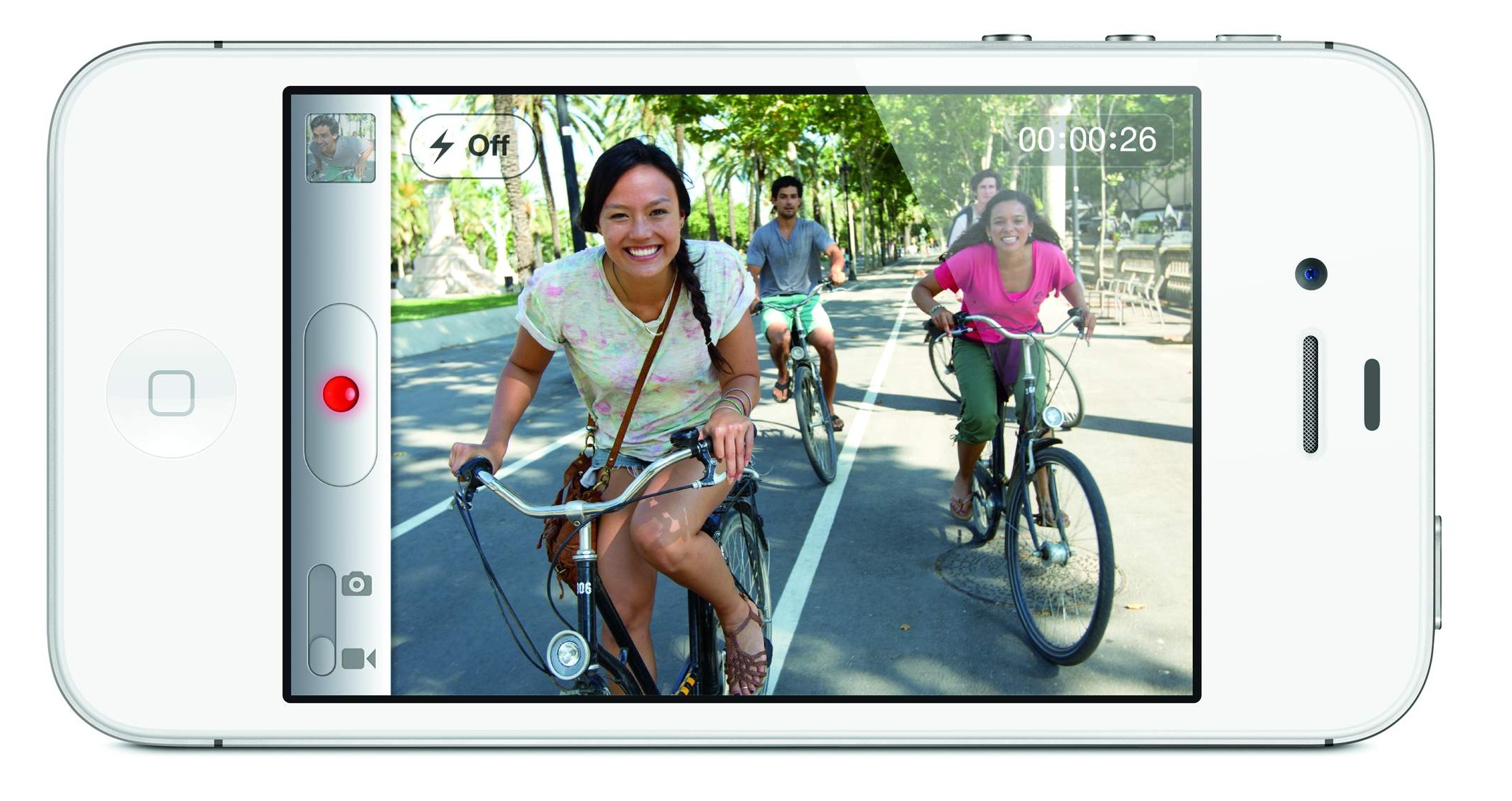
iOS7 adds lens filters (which will only be available on the iPhone 5 and iPod Touch fifth generation) for applying effects to the scene or object before taking the photo, plus image filters -- which will be available across the iPhone 4, 4s and 5 plus iPad 2, 3 and 4 -- for adding effects after the picture has been taken.
iTunes Radio
The free internet music service, which allows users to listen to ad-supported stations will work across all iPhones 4, 4s and 5, plus the iPad 2, 3 and 4 as well as the iPad Mini. Subscribers to Apple's iTunes Match cloud music storage and streaming service will be able to tune in ad-free. However, to begin with at least, iTunes Radio will only be available to US consumers. Apple has set no date yet as to when it is expected to go live in other territories.
Other features
Any updates the iOS7 brings that are to its pre-installed undeletable apps, such as the calendar, weather, stocks, note-taking, web browser, email and of course, Apple Maps, will work across all compatible devices.

Monday, August 20, 2012

Ten hidden controls of the iPhone headphones

It's never too late to discover that those boring, all-white headphones Apple threw in with your iPhone can do a lot more than adjust the volume.

In fact, any headphones that include a remote (or have a remote adapter attached) can be used to control your iPhone, iPad, or iPod Touch in up to 10 ways.

Thanks to this post by Business Insider, here are all the ways you can use your headphones as a remote controller, allowing you to perform useful functions without taking your iDevice out of your pocket.
  1. If you're listening to music, toggle pause or play by tapping the center button once.
  2. To fast-forward a song, tap the center button twice and long-press on the second tap.
  3. To rewind a song, tap three times and long-press on the third tap.
  4. To skip a song, double tap.
  5. To go to the previous song, triple tap.
  6. If you have an incoming call, tap the center button once to answer. Tap again to hang up.
  7. To ignore an incoming call, long-press the center button. You'll hear two beeps to confirm that the caller was sent to voice mail.
  8. If you're on the phone and you get a new call, tap the center button once to switch calls. To end that new call, hold the center button down for 2 seconds.
  9. You can achieve supersteady shots by using your headphones as a shutter release. Tap the volume-up button to capture a photo.
  10. For iPhone 4S owners: prompt Siri by long-pressing the center button.
Ref:  http://sg.news.yahoo.com/ten-hidden-controls-of-the-iphone-headphones.html

Saturday, June 16, 2012

How to Turn your iPhone into a WiFi Hotspot (how to)

Knowing that they were missing out on yet another way to nickel and dime their customers, AT&T worked with Apple and added a hotspot feature in iOS 4.3 and above, the result is that iPhone 4 users can turn their phone into a wireless hotspot with yet another hefty monthly fee. Verizon users can also get the privilege for a similar additional fee of $20 a month. But for the easy nature of simply flipping a switch, or for those not comfortable with jailbreaking their phone, it’s a convenient, but costly method. And if you like to play by the rules, well, enabling your iPhone’s hotspot feature couldn’t be easier. One warning though, if you’re currently grandfathered into AT&Ts unlimited data plan, once you enable the hotspot feature, you will have forfeited your all your can eat days in favor of their more limited tiered plans.

1. Talk to the right people (legal option)

Contact AT&T or Verizon and have the hot-spot feature enabled on your phone account.

2.Set up your phone

Once AT&T or Verizon has given you official sanction, you can go into your iPhone’s “General Settings”, and under “Network,” you’ll find the Hotspot switch and the ability to password protect it. Please note, that this is for iPhone 4 customers only. If you’re using an iPhone 3GS, you won’t have the hotspot feature available.

3. Catch a WiFi signal and a wave

Once you’ve got the phone all set up, all that’s left to do is connect the phone to your laptop or other wireless device by selecting it amidst the available WiFi signal.
That’s it for the official method. if you’re still using an iPhone 3GS or want to use the hotspot feature “under the radar,” then there’s a simple two step method to jailbreak your phone and add hotspotting under the radar …

1. Jailbreak your phone (illegal option)

Now I know what you’re thinking … it’ll void my warranty! It’s illegal! It’ll mess up my phone and I won’t get it back to the way it was! All not true. First, it won’t void your warranty, nor will it mess up your phone to the point you can’t get it back in working order. If you don’t like it, you can easily go into iTunes and restore it to the way it was. It’s a good idea, though, to backup your iPhone in iTunes before you jailbreak it. And it’s not illegal either. According to the US Library of Congress Copyright office, it is perfectly legal to jailbreak your phone. So fear not. The only reason to not jailbreak your phone is that when there are updates, you have to reset your phone back to the way it was to update it. Then you have to wait for the jailbreak tools figure that out before you can free it up again. But these days, it’s largely a painless process now.
Now that we got that out of the way … There are a myriad of ways to accomplish this, but by far the easiest is to use a web based app like jailbreak.me, which frees your phone with a simple, familiar slide. Other utilities to jailbreak your phone include “redsn0w,” Pwnage Tool, but there isn’t anything as easy as Jailbreak.Me.
So, how do you do it? Easy. a) Just navigate to with your phone’s safari app to this page b) tap the “Free” icon for Cydia. The Free Icon becomes an Install icon c) tap that as well. It will then install Cydia, the open source iPhone app store onto your phone. d) Then, reboot your device.

2. Open Cydia and download MyWi

MyWi is the hotspot utility that will enable you to unofficially turn your phone into a hotspot. You can try it out for free, but if you plan to use it beyond the free trial, MyWi is about $20. You can set passwords, change your SSID settings, make security settings, etc. Once you have MyWi installed and enabled, you will notice a blue bar at the top of your screen showing the hotspot connection active and functioning. You will also not how much data you are using both up and down – a handy feature.

3. Surf to your heart’s content … or until you’re caught

Once you’re all set up, you can acquire your phone’s WiFi hotspot signal and you’re off to the races. It’s a simple matter of choosing your iPhone from the list of wireless routers your gadget or laptop sees and inputting the password.
A few things though. First, using your iPhone as a wireless hotspot will drain your phone’s battery as fast as continually using your GPS feature. But you can get a few hours of hotspot use easy from it. Or, you can attach your phone to your laptop via USB and not only have the security of a wired connection, but also not drain your phone battery thanks to the USB charge feature.
Additionally, wireless carriers have taken to having the iPhone call home and download usage statistics. If they see you have been using your phone with another number or with unauthorized hotspotting they’ll simply add the charge to your bill. The good news is, however, that it isn’t a contract fee, so if you stop using it, they won’t charge you, even if you’re paying by the rules. But it also means you don’t have that extra bump in your data cap.
In the end, it may just be easier to get a MiFi card which will provide 3G wireless hot-spotting for a minimal fee. They range from $20-60 a month depending on data usage and doesn’t require jailbreaking or catching the ire of your wireless carrier.

Ref:  how-to-turn-your-iphone-into-a-wifi-hotspot

Tuesday, April 17, 2012

iPhone and iPad tips: How to make the most of Apple's hottest devices

The latest smartphones and tablets can save us time, effort and allow us to have more fun on the move.

But unless you've dozens of spare hours, it's unlikely you’ll delve deep enough into the device to get to grips with everything it can do.
A woman tries out an e-book reader app on an Apple iPad (Copyright: AFP)

Most of us never use our gadgets to their full potential but if you have an iPhone running the latest iOS 5.1 software - or the new iPad – then there are plenty of tips and tricks to make the most of the technology at your fingertips.

To help, here are 20 iOS suggestions to check out for both the iPhone and iPad.

Take note of notifications - Find out the weather news, the latest share prices and more crucially see all your missed calls and messages simply by swiping your finger down the middle of the screen from top to bottom to open Notification Center. To have more items show up in it, go to Settings > Notifications and tap any item that is not listed under the Notification Center and then turn it on.

A snappier way to shoot - Desperate to take an important photo but the iPhone is locked? Double click the Home button and the camera icon appears, putting you just a tap away from that perfect picture.

Grab the screen - Take a screenshot at any time by pressing the Home and lock button simultaneously. You will see the screen flash and find the image you’ve taken in your Camera Roll.

Sort your apps - Press down on any app until every icon on the screen begins to shake. You can then drag apps from one screen to another but also drag one on top of another to create a folder. The iOS software will automatically assign a name to this folder, judged by the type of apps you put in it. This name can though be changed. Try and drag similar apps on top of each other to create the most useful folders.

Rise to the top - In nearly all applications, you can scroll instantly to the top of long pages (such as websites, emails or social media timelines) by tapping the Status Bar.


The iPad is the Apple of many a gadget fan's eye (Copyright: Reuters)

Talking about your emotions - You don't need a third-party app to get smiley, teary or winky faces for your messages. You'll find a Emoji keyboard filled with these icons built into iOS 5. Go to General > Keyboard > International Keyboards and tap "Add New Keyboard", look for Emoji and select it.

Speak your words - If you own the new iPad, then one great addition is voice dictation. You'll see a microphone icon appear on every keyboard you type on. Tap this and record what you want to say.

Soar into iCloud -
If you own more than one iOS device then iCloud is a must. Even if you only own one, it's a simple way to backup your precious contacts and photos. Go to Settings > iCloud and sign in with your Apple ID. Having iCloud also means anything you download or store on your Apple devices can instantly be shared between them all.

Create phrase shortcuts -
If you don't want to type out a long phrase every time you need to use it, create a simple shortcut. Go to General > Keyboard > Shortcuts > + and then enter your phrase and shortcut. Auto-complete will then suggest it when you type in the shortcut.

Understand iMessage - You can now instant message for free any of your friends who own an iOS device including an iPad without needing to send a traditional paid-for SMS text. You can see what type you're sending in the text field as it'll say iMessage or Text Message. The two are also now shown as different colours with iMessage in blue and texts in green.

Split the iPad keyboard in half -
This is pretty cool for those who struggle to type on the iPad. Using two fingers, you can pull the keyboard apart from the middle making it appear on either side of the screen. It actually makes it much quicker to touch-type with only your thumbs while holding the iPad with your fingers behind it. Try it, you'll love it.


[Related Story: Best iPhone transport apps to get you from A to B in the UK]


Make your own website apps -
You'll find this really useful if some of your favourite webpages don't have specific downloadable apps. Bookmark favourite webpages as app-style icons by selecting the button at the bottom of Safari with an arrow inside a square. Choose 'Add to Home Screen' and iOS will turn the page into an icon you can name.

Never lose your iOS device -
The Find My iPhone or iPad app means you can track down the gadget if you mislay it, or even if it gets stolen. You can check out where it is on a map - assuming it is turned on and sending a signal - or make it ring in case it is nearby. More usefully, it can be locked or wiped if it falls into the wrong hands.

Go Retina on the new iPad -
It's a real waste not to take advantage of the gorgeous screen on the new iPad, it's the main reason to buy one or upgrade from the iPad 2. The Retina display has more pixels crammed in than most big HD TVs so download or update apps that have been optimised for this immense screen quality. Just click here to open up a list in iTunes.

Check your app sizes - You may well have 64GB of space on your iPhone or iPad but that doesn't mean you should needlessly fill it with massive apps that you never use. Go to Settings > General > Usage and you can see the amount of space each app is taking up.

Keep an eye on your data use - In a similar way to the app sizes, go to Settings > General > Usage > Cellular Usage and you can view statistics for the length of Call Time and the amount of data you've sent and received. Tap the Reset Statistics button to put all the stats back to zero to start again. If you know the date your billing cycle begins, then consider resetting it on that date each month to ensure you don't go over your network limits. Set a Calendar reminder so you don’t forget.


[Related Story: Best free apps for your iPhone]


Surf in private - Safari has the option to let you surf the internet without things appearing in your iOS device's web history. If you go to Settings > Safari you can switch Private Browsing on. But remember when it's switched on, nothing is saved so you have to type in the same URLs again and again if you visit them often.

Go text only in Safari - When you're viewing webpages you may notice a Reader icon appear in the URL box of Safari. By tapping this, you can remove all the pictures and adverts and simply show the article text. You'll also be able to increase the font size making this option great for those with eyesight problems.

Learn the iPad gestures - You can now use a range of gestures on the iPad when you have iOS 5 installed. You can switch from app to app with a four finger swipe, while pinching with five fingers brings up the Home screen.

Set Parental Controls - Whether your child is using your iPhone or iPad, or their own, you can set controls on their usage. Go to Settings > General > Restrictions and you'll find a list of all the possible controls including ensuring a password is needed for any in-app purchases. It could save you a small fortune if the little 'uns use your device to play games.

Ref:  http://sg.news.yahoo.com/iphone-and-ipad-tips--how-to-make-the-most-of-apple-s-hottest-devices.html

Thursday, April 12, 2012

25 Awesome iPhone tips and tricks

iPhone
Whether you're a seasoned user or brand new to the iPhone world, chances are you're probably not using your smartphone to its fullest.

Don't worry, you're not alone, as these pocket-sized computers boast many hundreds of features buried in the operating system.

And so here we share a number of our favorite iPhone tips and tricks, some of which you may know already. Hopefully there's a good number of ones you aren't aware of yet. Most of these following 25 suggestions will work with all versions of the iPhone, but be sure to have the latest software installed (iOS 5.1).

OK, here we go:

Take a photo with your headphone cord: Now that you can use the volume up or down buttons to snap a photo, steady your hand while framing up the photo and when you're ready to take the picture, press the button on the cord so it won't shake the iPhone. Voila!

Dry out a wet iPhone: You're not the first one to drop an iPhone in a toilet or sink. If this happens, don't turn it on as you can damage the smartphone by short-circuiting it. Lightly towel dry the phone. Don't use a hairdryer on the phone as it can further push moisture into areas that aren't wet. Submerge the iPhone in a bowl or Ziploc bag of uncooked white rice and leave it overnight. If you have it, try using a desiccant packet you might find with a new pair of shoes or leather purse.

Dismiss suggested words: If you're typing an email or note and the virtual keyboard is suggesting the correct spelling of the word — and you don't want to accept it — you don't need to tap the tiny "X" at the end of the word in question. Simply tap anywhere on the screen to close the suggestion box.

Take photos faster: Even if your iPhone is locked you can double-tap on the Home button and you'll see a camera icon you can tap to open the camera immediately. Now you can use the volume up button to snap the photo, too. You can also use the volume up on the headphone cord to take a photo (if you want to) and pinch the screen to zoom instead of using the slider bar.


Use location-based reminders: You probably know Siri can be used to set a reminder, like saying "Siri, remind me to call mom at 4pm today." But did you know you can set location-based reminders on your iPhone 4S? Say "Remind me to call mom when I leave here" or "Remind me to call mom when I get home" and you'll be notified accordingly.

Get word definitions: Apple has recently added a built-in dictionary and you can access it in most apps that let you select a word. Simply press and hold on a word — such as in an email, reminder, iBooks, and so on — and you'll see a pop-up option for "Define."

Revive a frozen iPhone: If your smartphone freezes on you and pressing the Sleep/Wake button on top of the device doesn't do anything, don't panic. Instead, press and hold the Home button and the Sleep/Wake button at the same time. You'll be prompted to swipe the "Slide to Power Off" tab. This so-called "hard reset" resuscitates the frozen iPhone. You'll first need to wait through a full shut down and restart.

Get more done in less time: You can create shortcuts to words and phrases you use a lot, such as Northern California Association for Employment in Education. In Settings, go to General, then Keyboard, and select Add New Shortcut. Now you can add new words or phrases and assign shortcuts to them (such as "NCAEE," in the above example, and it'll type out the full word each time.

See a 6-day weather forecast: If you're one of the many weather junkies out there, you probably know you can swipe down the iOS device's screen and you'll see the Notifications center. Weather will be at the top, but did you know you can swipe to the left or right and you'll toggle between current conditions and a 6-day forecast? Plus, jump to the Weather app by tapping anywhere on the weather bar inside Notifications screen.


Select URL domains faster: When typing a website address in Safari, you don't have to type the ".com." For example, you can type "yahoo" in the URL box to get to yahoo.com. On a related note, you can press and hold down the .com button and you'll see a list of alternatives to choose, such as .net, .org and .edu.

Make your own ringtone: Don't settle with the ringtones provided by Apple and you need not pay your carrier for more of them. As the name suggests, the free Ringtone Maker app lets you take a clip from your favorite songs and make ringtones out of them in seconds.

Feel and see when people call: Apple has added a number of accessibility features to iOS 5, specifically designed to assist those with hearing, vision, mobility and other disabilities. For example, those who are hearing impaired might opt to have the LED flash when a call comes in. If you're seeing impaired, you could set a unique vibration pattern for different people in your Contacts, so you know who's calling.

Find your lost iPhone: As long as you sign up in advance, the free Find My iPhone app will help you locate your device on a map (on your computer or other iOS device). You can display a message or initiate a loud ring (in case it's under the cushions), or remotely lock or wipe its data.
Save photos in Safari: You're surfing the web in Safari and stumble upon a photo you'd like to save. Simply press and hold on a photo when on a website and you'll be prompted with a menu asked if you'd like to "Save Image." Once the photo is saved, you can view it offline, email it or set it as wallpaper.

Take an iPhone screen grab: On a related note, if you want to take a screenshot of a website or application, press down on the Home button and tap the Sleep button. You'll hear the camera click, see a white flash and the screenshot will be saved to your Camera Roll.


Get new sounds: It's been a long time coming, but Apple has added the ability to select custom tones for incoming text messages, new emails, voicemails, tweets, calendar alerts, reminders and more. You can select something you like from within the Sounds menu. You'll also notice you can scroll to the top of this list of sounds and you'll see a "Buy More Tones" option, which takes you to iTunes.

Zip to the top of the page: In Mail, Safari, Contacts and other apps, simply tap the status bar at the top of the screen — the area that displays time, battery and cell bars — to jump back to the top quickly.

Prolong your battery: Speaking of the battery, here's how to squeeze more life out of your iPhone between charges. Turn down the brightness of your screen, turn off wireless radios you don't use (such as GPS, Wi-Fi or Bluetooth) and reduce the number of apps with info you have "pushed" to your phone. Also, make sure you lock it before putting in your pocket, purse or backpack or else it could turn on and drain the battery.

Spread out the keyboard for easier typing: Here's a tip for iPad users: If you like typing while holding the tablet, rather than stretch your fingers or thumbs for those middle letters like G, H, Y or B, you can drag the keyboard to each side of the screen to separate it into two, allowing you to easily type while holding it.

Learn some gestures: Close any app ridiculously fast by putting your four fingers and thumb stretched on the screen and pinch inwards. Sweet! You can also magnify what's on your iPhone screen with a three-finger tap. You'll first need to go to Settings, General, Accessibility, and select the various gestures options here.

Create an "app" out of a website you visit often: To add a website to your Home screen, just visit the webpage in Safari and at the top of the screen, tap the Go To icon and select "Add to Home Screen."

Create a music playlist on the fly: You no longer need a computer to create a playlist. In the Music app, tap Playlists, then select Add Playlist and give it a name ("Marc's Workout Mix"). Now, tap any song (or video) to add it to the playlist. You can add individual songs, entire albums, or all songs by a particular artist.

Don't waste your day deleting messages individually: You can delete unwanted emails en masse rather than deleting one at a time. In your Inbox, simply click the Edit button and check off the emails you want to delete with your finger and then choose Delete.

Keep track of your texting limits: If you don't have the best texting plan and don't want to unnecessarily pay to send more texts than you need, here's a tip to turn on the character count in the Messages app. Enable this in the Settings>Message option to keep an eye on your word count. Usually, your one text becomes two after 160 characters.

Mirror your iPhone with your TV: If you own an Apple TV, you can instantly and wirelessly share exactly what's on your iPhone 4S or second- and third-generation iPad with your HDTV, connected to an Apple TV — such as games, apps or videos. Simply double-tap the Home button, swipe all the way to the right and select AirPlay Mirroring.

Ref:  http://shopping.yahoo.com/blogs/digital-crave/25-awesome-iphone-tips-tricks-175636187.html

Saturday, May 28, 2011

Four Ways to Make Your Battery Last Longer

by DAVID POGUE, On Tuesday 24 May 2011, 1:48 SGT

A good friend of mine had been complaining that her iPhone 3GS battery was holding less and less of a charge. When we got together at 5 p.m. one recent day, it was at 5 percent full - and it had been fully charged that morning. She had barely used it all day. The phone was apparently running itself dry simply by being turned on.

The single biggest battery consumer is the screen brightness. But it wasn't especially bright on this phone.

So I suggested that she take the phone to an Apple store to get the $60 battery replacement service. In fact, there was an Apple store only two blocks away, so I accompanied her - and found out, upon arrival, that there is no $60 battery replacement service! There's one for iPods, but apparently not for the iPhone.

There are plenty of do-it-yourself and third-party battery-replacement services that advertise online, but the Apple store Genius, named Nicole, said none of that would be necessary. She tested the battery and found that it was perfectly fine!

Instead, Nicole pointed out a few things that were contributing to my friend's rapid battery depletion. I took notes and thought I'd pass them along.


  • Push e-mail. This, I believe, was the big one. My friend has seven e-mail accounts, and her phone was checking each of them every 15 minutes. If you turn off the "Push" feature, and set it to Manually instead (in Settings->Mail, Contacts, Calendars->Fetch New Data), then your iPhone checks for e-mail only when you actually open the e-mail app. Your battery goes a lot farther.

(If you have a corporate Exchange account, your calendar and address-book data will similarly be updated only when you open those apps.)


  • GPS checks. In Settings ->General->Location Services, you'll see a list of all the apps on your phone that are using your phone's location feature to know where you are. (It's a combination of GPS, cell-tower triangulation and, on some phones, Wi-Fi hotspot triangulation.) All of that checking uses battery power, too. My friend had dozens of apps with Location Services turned on, many of which didn't really need to be on. She turned most of them off.


  • Notifications. Similarly, in Settings -> Notifications, you see a list of apps that are allowed to display pop-up notifications (those blue text bubbles that look like text messages). To do that, they have to monitor what's going on with your phone - and that takes juice. Turn off the ones you don't really need.


  • Background apps. Nicole the Genius discovered that my friend had a huge number of apps open - maybe 40 of them. She maintained that they were using battery power, too, in the background.

Now, I kept my mouth shut. But I'd been led to believe that background apps are generally frozen into suspended animation precisely so that they don't use battery power. In fact, Apple was criticized when it introduced "multitasking" in the latest iPhone software, precisely because apps don't actually keep operating in the background. Only a few sanctioned features keep running in the background (Internet radio playback and GPS tracking, for example).

Even so, Nicole quit all 40 of the apps that were still open. (To do that, double-press the Home button to open the multitasking app switcher. Hold your finger down on any icon until they all start wiggling. Tap the little X close boxes to manually quit open apps.)

Did the Nicole treatment work? Very well indeed. The next day, my friend's battery, by the same time of day (5 p.m.), was still at 80 percent!

So there you go: How to make your iPhone battery last a lot longer. For free. You're welcome.

Wednesday, May 18, 2011

Upgrade - Macbook Hard Drive with Win XP partition


Since I bought my Macbook in February of 2007 it has been rock solid with very few problems. I had my 150 GB Hard Disk partitioned to 3 parts for Mac OS, Shared Drive and Win XP.


After a few iPhoto project, I was running out of Hard Disk space to do anything else. So it was high time to upgrade the Hard Disk to Western Digital 500 GB. I still want my 3 partitions, but with 500 GB to play with. I can allocate 200 GB for my Mac OS, 100 for Shared Drive and the balance for Win XP. In addition, I want to upgarde the Mac OS 10.5 Leopard to OS X 10.6 Snow Lepard.


I had OS X Leopard installed so the process is pretty simple, just use Super Duper or Carbon Copy Cloner to do the copy, pull out the battery, unscrew the three screws and all would work. But, I installed Win XP so the problem became more complicated.


So I did my googling, and ran across WinClone. This was the easy way to save the Bootcamp partition without having to re-install everything. There is one HUGE downside though, but I’ll come to that in just a bit.


So, here was my procedure for upgrading my hard drive:


Pull out my current Macbook’s hard drive.Partition the new hard drive into two partitions.Then use WinClone to make an image of the Windows Partition.Clone my current Macbook’s Mac OS X Partition to the new Partition on the new driveRestore the Windows Vista Partition using WinClone.Install new Hard Drive and remove old hard driveBoot up new hard drive to verify that it all works, both OS X and Vista.Relax now that it is done?.
Now Let’s dive into each of these individual sections.


Step 1. Connect the new hard drive to the MacBook via USB.
I bought a 2.5″USB enclosure for the new 2.5″hard drive and connected it to the Macbook via USB.


Step 2. Partition the new hard drive into three partitions.
The MacBook detected the new hard drive and activated Disk Utility automatically. I partitioned the drive into 200GB for Mac OS X using HFS+ Journaled and 100GB for Shared Drive using MS-DOS and 100GB for Win XP using MS-DOS. This went smoothly.


Step 3. Clone the Macbook’s Mac OS 10.5 Partition.


Download Carbon Copy Cloner from the internet. It is a freeware, but please be kind to the developers by giving a generous donation when prompted. Run Carbon Copy Cloner to do an exact clone of my OS X Partition. It will direct you to select the drives accordingly to perform the cloning. This did take a while, but as expected went flawlessly. In comparison to cloning Win XP, this process is reletively fast.


Step 3. Use WinClone to make an image of the Windows Partition.
This worked beautifully, yet it took several hours to complete. (This is the downside that I mentioned earlier). So I started making an image of the Windows Partition. I hooked up the drive and enclosure to my iMac and did the WinClone procedure and saved the image to my iMac’s hard drive.


Remember, I have 2 macs, so it might be possible to do this with only one Mac, but it might be a bit slower. And you could have used the Mac Partition of the new hard drive to store the image to be restored. Then delete the file and do the Clone of the OS X Partition.


Step 4. Clone the Macbook’s Mac OS X Partition.
After the WinClone procedure finished I unhooked my old drive and put it back into my Macbook. After replacing the screws and battery I booted up the Macbook into OS X. I hooked up the newly partitioned hard drive to my Macbook and proceeded to use Super Duper to do an exact clone of my OS X Partition. This did take a while, but as expected went flawlessly.’


Step 5. Restore Windows Partition using WinClone .
Again, I hooked up the new hard drive to my iMac and went ahead and restored the saved image of Vista from WinClone onto the new hard drive. This, like the initial imaging process took hours to complete. But, I sat and waited and it did finished successfully.


Step 6. Install new hard drive and remove old hard drive.
I followed the same procedure as pulling out the old hard drive earlier. I pulled out the battery, removed the three screws and pulled out the hard drive. The hard drive is in a flimsy aluminum carriage that has a tab to easily pull the hard drive out. This is secured with 4 star screws which, luckily, I had a set of screw drivers that could remove these. I put the carriage on the new hard drive and reinstalled the hard drive, screws and battery.


Step 7. Boot up new hard drive to verify that it all works, both OS X and Vista.
This was the moment of truth. Did I screw something up? Did Winclone fail? Would everything boot up as expected? Well”¦ all copied and booted the first time without any problems. So it was a rousing success. I did test out both Operating Systems just to be sure that everything did work and that it would not crash on me in the middle of something. So far it hasn’t.


Step 8. Relax now that it is done?.
Obviously yes, I could relax knowing that everything booted and all of my data was secure.
Final Thoughts.


So Far everything is working as expected. The only little hitch I have run across is that it does seem to take longer than usual when accounts want to log off. While this isn’t a big problem it is a noticeable difference. I might try running some of the usual things, like Verify Disk and Onyx to clear up any caches and the like, just to see if that will correct the problem. I’d think it would. But if not, it’s not the end of the world.